The Details You're Walking Past: A Field Guide to the Polish Heart of La Poland Park
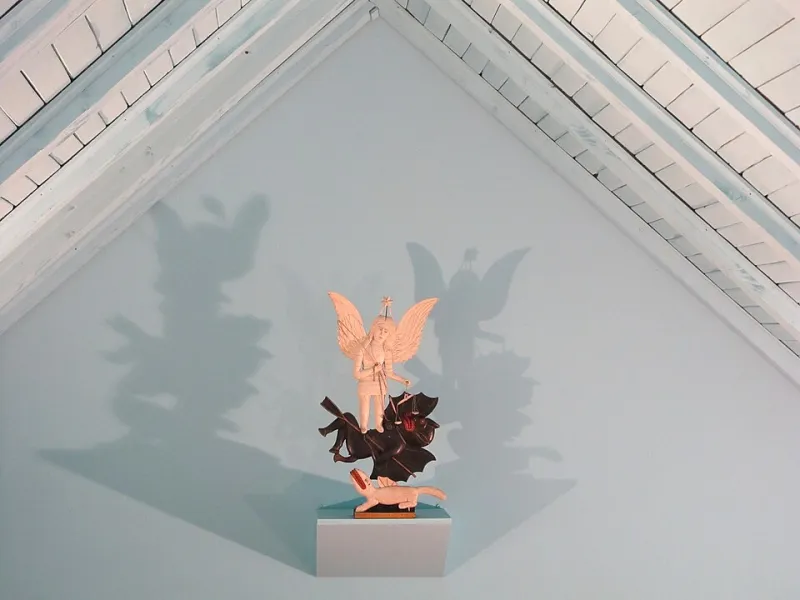
Photo: Qkiel, CC BY-SA 4.0, via Wikimedia Commons
There's a moment that happens at La Poland Park almost daily. A guest stops mid-stride in the village square, squints at a painted wooden flower box or a paper cut-out hanging in a window, and asks a staff member: wait, is that actually from Poland?
Usually, the answer is yes — or a loving reproduction of something that is. And once you start noticing, you can't stop. The park isn't themed with Poland the way a movie set is themed with a city. It's woven with it. Here's your field guide to what you're actually looking at.
The Paper That Isn't Trash
Those colorful cut-outs hanging in cottage windows around the folk village? They're wycinanki (vee-chee-NON-kee), a Polish folk art of layered paper designs that dates back to the 1800s, when farm families made them by hand from sheep-shearing scissors. The rooster and floral patterns you'll spot throughout the park mirror the styles from the Łowicz region specifically — one of the most recognizable in the country.
Docents in the village occasionally run make-your-own sessions in the afternoons. Kids fold, cut, and unfold a design that looks far fancier than the effort involved. It's the park's best five-minute souvenir.
The Food Traditions Hiding in Plain Sight
Everyone knows the pierogi. Fewer people know the ritual behind the rest of the menu:
- Żurek, the sour rye soup served in a bread bowl at the winter market stall, is traditionally an Easter-morning dish in Poland. The park serves it all season, but regulars swear it tastes right in March.
- Pączki — those glorious jam-filled doughnuts — appear ahead of Tłusty Czwartek, or Fat Thursday, the Polish answer to Mardi Gras that falls the Thursday before Lent. The park's pastry window sells out by noon that day. Every year. Plan accordingly.
- The smoked cheese skewers at the mountain lodge stand are modeled on oscypek, a cheese still made by hand in the Tatra Mountains and stamped with a pattern that's legally protected in the EU.
The Calendar Is the Real Attraction
Here's the thing most first-time visitors miss: La Poland Park changes personality with the Polish folk calendar, not just the American one.
- Spring brings the Marzanna tradition — an effigy of winter, symbolically 'drowned' in a ceremonial send-off to spring. The park does a family-friendly version with crafts and a procession that ends, mercifully, in cookies.
- Summer is festival season, with regional folk dance troupes, live music, and the kind of embroidered costumes that make every photo look like a postcard.
- Fall features harvest-themed dożynki celebrations — a centuries-old tradition of thanking for the year's crops, complete with wreath-making and bread sharing.
- Winter turns the square into something out of a storybook, with a Christmas market vibe, hand-painted ornaments, and carols sung in both Polish and English.
Four visits, four different parks. That's not marketing — that's how the folk calendar actually works.
Look Up, Look Closer
The craftsmanship in the buildings themselves rewards a slow walk. The wooden detailing around the chapel doorway uses joinery techniques from the Carpathian highlands. The floral murals inside the dining hall draw from regional painting styles specific to the village of Zalipie, where residents have painted flowers on everything — walls, wells, doghouses — for over a century.
Staff will tell you several of the artisans who created the park's decor trained in folk arts or worked from family patterns passed down generations. The details aren't set dressing. They're heirlooms.
Why It Matters for Your Visit
You don't need to memorize any of this to have fun. But knowing that the paper flower on the window took someone's grandmother an evening to cut out — that changes the way you move through the park. You slow down. You ask questions. You taste the soup in March.
And you find yourself planning the next visit around a festival you'd never heard of a year ago. That's the quiet magic here: a theme park that teaches you a country's calendar without ever feeling like homework.
Come in spring. Come at Fat Thursday. Come whenever — but come curious. The details are waiting.