Why Families Never Really Leave La Poland Park Behind
You've probably been to a mega theme park at least once. You know the drill — hours in line, sensory overload, a gift shop the size of a football field, and a credit card statement that still haunts you three months later. By the time you're back in the car, the kids are exhausted, you're exhausted, and somewhere between the parking shuttle and the highway on-ramp, you wonder if it was all worth it.
Then there's La Poland Park. And the conversation on the drive home sounds a little different.
"Can we come back next month?"
That question — asked by a six-year-old somewhere in the back seat, chocolate pierogi still on her chin — is basically the park's unofficial tagline. And it turns out, there's a lot of real science and genuine human psychology behind why it keeps happening.
The Scale Actually Works in Your Favor
One of the first things repeat visitors mention when they talk about La Poland Park is how it fits. Not too big, not too small. You can actually see your kids from across the courtyard. You can meet up with your group without a 45-minute coordinate-by-text operation. You can finish a full plate of żurek soup before it gets cold because the walk from the food stalls to the picnic area is, you know, a normal human distance.
Leisure researchers have a term for this: restorative environments. These are spaces that feel manageable and coherent — places where your brain isn't constantly working overtime to process chaos. Big parks are thrilling, sure. But they can also be cognitively exhausting in ways that leave families feeling drained rather than recharged. La Poland Park's intimate footprint means your nervous system gets a break, which paradoxically makes the whole experience feel more vivid and memorable.
The Martinez family from outside Chicago has been coming to La Poland Park for six consecutive summers. "We did one of the giant parks in Orlando when the kids were little," says mom Renata. "It was incredible, honestly. But by day two we were basically just surviving it. Here, we're actually present. We notice things. We talk to each other."
Cultural Authenticity Does Something to People
Here's where La Poland Park genuinely sets itself apart, and it's not something you can manufacture with a fresh coat of paint and a new roller coaster.
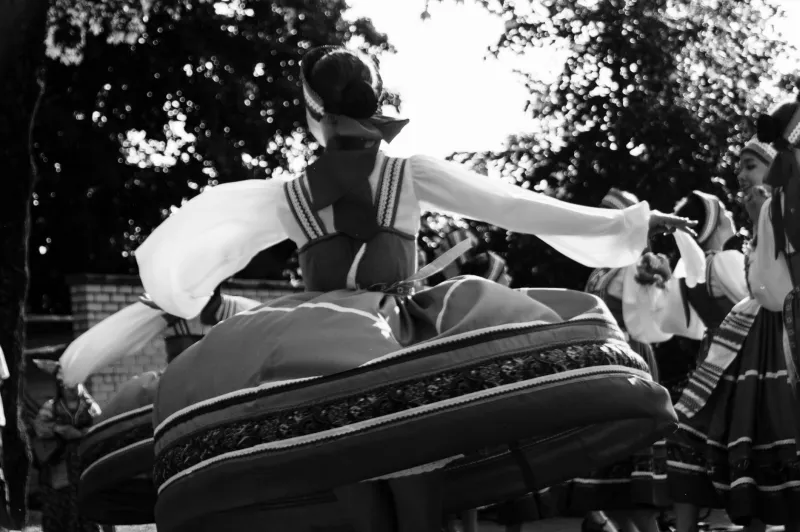
The park's Polish heritage isn't a theme slapped on top of a generic amusement experience. It runs through the whole thing — the architecture, the seasonal programming, the food, the music drifting out from the pavilion on a Saturday afternoon. For Polish-American families, that authenticity hits different. It's recognition. It's a place where your grandma's stories have a physical address.
But here's the thing: you don't have to have Polish roots to feel it. Authenticity is contagious. When something is genuinely rooted in a real cultural tradition rather than assembled from a mood board, visitors of every background pick up on it. It creates curiosity. It sparks conversations between strangers. It makes the experience feel earned rather than manufactured.
Dr. Marta Kowalczyk, a behavioral researcher who studies leisure and cultural identity, explains it this way: "When people encounter a space that has real cultural coherence — where the stories, the aesthetics, and the experiences all point in the same direction — they form stronger emotional attachments to that place. It becomes meaningful rather than just entertaining."
That meaning is what brings people back. You can get a thrill ride anywhere. You can't get this anywhere.
Shared Discovery Builds Family Bonds That Last
Ask any family therapist what makes a vacation truly bonding, and they'll tell you it's not the passive experiences — it's the moments of shared discovery. Finding something unexpected together. Laughing at the same thing at the same time. Trying a food nobody's had before and making the same weird face.
La Poland Park is engineered — whether intentionally or not — to produce exactly those moments constantly.
The Hendersons from St. Louis stumbled onto a traditional Polish paper-cutting workshop during their first visit two years ago. "None of us knew what wycinanki was," dad Kevin admits. "We all sat down thinking it would take ten minutes. We were there for an hour. My son still has his piece hanging in his room." They've been back twice since, and that workshop is now a family ritual.
This is the compounding effect of meaningful leisure. Each visit builds on the last. Families don't just return to La Poland Park — they return to their version of La Poland Park, the one that includes their specific memories and discoveries. That's a profoundly different relationship than the one most parks can offer.
The Multigenerational Factor Is Real
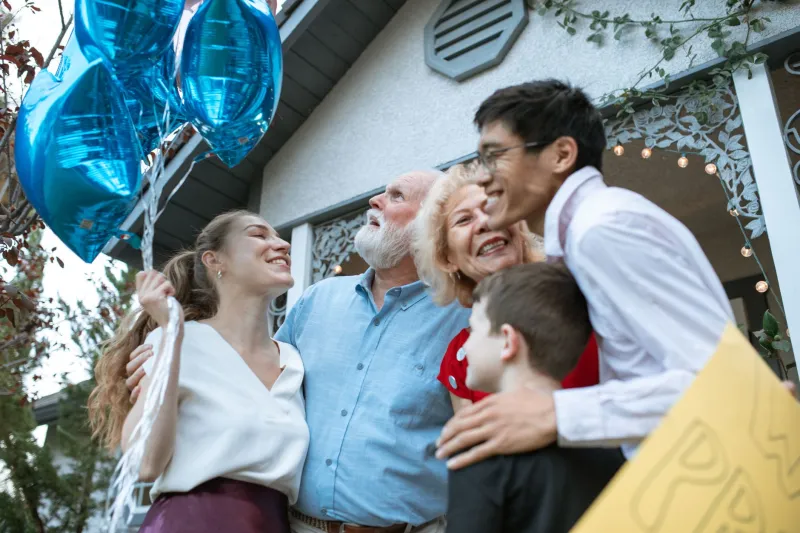
Something you notice when you spend a day wandering La Poland Park: the age range of visitors is genuinely wide. Grandparents pushing strollers, teens actually choosing to hang out with their families, little kids dragging adults toward the next thing with pure unfiltered enthusiasm.
Most theme parks quietly optimize for one or two demographics. La Poland Park, almost by accident of its cultural DNA, ends up speaking to everyone. Older visitors connect with the heritage and the food traditions. Younger kids are drawn to the energy and the spectacle. Teens — notoriously hard to impress — often find themselves surprisingly into the authenticity of it all, especially in an era when "real" is the most valuable currency in any experience economy.
The Wiśniewska family has three generations attending together every fall. Grandmother Irena, who immigrated from Kraków decades ago, calls it "the closest thing to home that doesn't require a passport." Her teenage granddaughter Sofia calls it "actually kind of cool, which I did not expect."
When a place can simultaneously satisfy a 78-year-old immigrant and a 16-year-old with strong opinions, you've done something genuinely rare.
What the Regulars Know That First-Timers Don't
Here's the quiet truth about La Poland Park that only emerges after a few visits: the park reveals itself slowly. There are corners and traditions and small details that you only notice once you've stopped rushing around trying to see everything.
The handpainted details on the food stall facades. The way the lighting shifts in the main courtyard around golden hour. The fact that the staff actually knows regulars by name.
That gradual revelation is part of what keeps families coming back. There's always something new to find, even in a place you've already visited. And the warmth of recognition — from the park itself, and from the community of returning visitors — creates a sense of belonging that's increasingly rare in commercial entertainment spaces.
In a world full of louder, faster, bigger options, La Poland Park offers something that quietly outcompetes all of them: a place that feels like yours.
And that's a feeling families don't tend to give up easily.