Strangers No More: Why La Poland Park Feels Like Coming Home the Moment You Arrive
Sarah Kowalczyk had never set foot in Poland. She couldn't name a single Polish dish beyond kielbasa, and her family tree traced back to rural Georgia, not Kraków. But about twenty minutes into her first visit to La Poland Park, something unexpected happened.
"I just started crying," she admits, laughing a little at herself. "My husband thought I'd hurt myself. But it wasn't that. It was more like — I don't know — like I'd been somewhere before that I'd never actually been."
Sarah isn't alone. Talk to enough La Poland Park regulars, and you'll hear some version of this story over and over again. People who expected a fun afternoon with the kids and walked away feeling like they'd stumbled onto something they didn't know they were missing. A place that felt, against all logic, like home.
So what's actually going on here?
The Science of Belonging in a New Place
Dr. Marcus Ellery, a social psychologist based in Chicago who studies community attachment and place identity, has a few theories. "Humans are wired for belonging," he explains. "We're constantly scanning our environment for signals that say 'you're safe here, you're welcome here.' When a space is designed to deliver those signals consistently and warmly, the brain responds — often before the conscious mind even catches up."
According to Ellery, the phenomenon Sarah described has a name in his field: place attachment — and it doesn't require personal history with a location to kick in. "We used to think you had to live somewhere to feel attached to it. But the research has shifted. Emotional resonance, sensory richness, and social warmth can create that bond in a matter of hours. Sometimes minutes."
La Poland Park, it turns out, checks a lot of those boxes — intentionally.
Designed to Welcome Everybody
Spend time talking to the people behind La Poland Park's guest experience team, and one phrase comes up constantly: "universal hospitality." The park draws deeply from Polish cultural traditions — the warmth of gościnność (the Polish concept of generous, heartfelt hospitality toward guests), the communal spirit of village squares, the sensory richness of traditional festivals — but it's deliberately translated into an experience that doesn't require a decoder ring to appreciate.
"Polish culture has this beautiful instinct to make people feel received," says one member of the park's experience design team. "We leaned into that hard. Every sight line, every gathering space, every food station is designed around the question: does this feel like someone's glad you're here?"
That might sound like standard theme park thinking, but the execution at La Poland Park goes a layer deeper. The layout of the park echoes the organic, human-scaled design of a traditional Polish rynek — a town square — rather than the spoke-and-hub efficiency of a typical amusement park. There are nooks and courtyards that invite you to slow down. There are communal tables. There are performers who make eye contact, not just performances to observe from a distance.
All of it, the designers say, is meant to trigger something primal: the feeling of being in a village where people know your name, even if they've just met you.
Nostalgia for a Place You've Never Been
Psychologists have a term for the peculiar ache of longing for something you've never actually experienced: anemoia. It's the nostalgia for a past that isn't yours — the way a black-and-white photograph of a stranger's kitchen can make you inexplicably sad and warm at the same time.
La Poland Park seems to reliably trigger anemoia in visitors, even those who came in expecting nothing more than a good time and maybe a pierogi.
Take Marcus and Devin, a couple from Phoenix who visited last summer with their two kids. Marcus grew up in a tight-knit Puerto Rican community in New Jersey; Devin's family has been in Texas for four generations. Neither had any connection to Eastern Europe whatsoever.
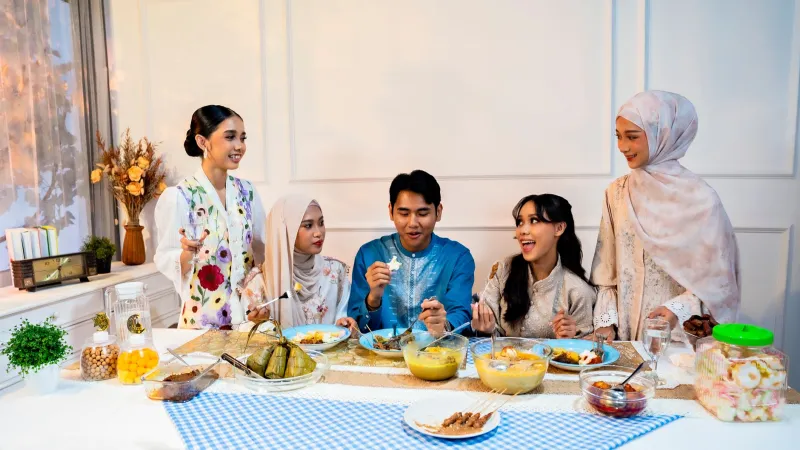
"There was this moment where we sat down at one of the big communal tables and there were like three other families there, all strangers, and someone passed us bread," Devin recalls. "Just passed it over like it was the most natural thing in the world. And I thought — this is what I always wanted family gatherings to feel like. This specific thing, right here."
What Devin was responding to wasn't Polish culture specifically. He was responding to something Polish culture happens to do very well: the ritualized, unspoken invitation to be part of something together. And La Poland Park has bottled that feeling with remarkable precision.
Community by Design
It's worth noting that the "home" feeling visitors describe isn't accidental or even purely emotional — it's partly structural. La Poland Park's layout actively discourages isolation. Seating areas are communal by default. Attractions frequently involve group participation rather than solo observation. Even the food culture — shared platters, long tables, performers who weave through dining spaces — nudges strangers toward each other.
"A lot of entertainment venues are designed around the individual experience," Dr. Ellery notes. "You're in your pod, you have your screen, you have your ride. La Poland Park flips that. The baseline unit is the group. And that shift alone changes how people feel about a place."
For American families in particular — many of whom live in suburbs where genuine community interaction can be surprisingly rare — that shift hits differently than expected. People come for the fun. They stay because something in the experience scratches an itch they didn't know they had.
What Visitors Actually Take Home
Ask people what they remember most about La Poland Park, and the answers are rarely about a specific ride or a particular show. They're about moments of unexpected connection.
The family at the next table who shared their dessert. The performer who pulled their kid into a folk dance and made her feel like a star. The moment the whole courtyard sang something together — nobody knowing the words, everyone laughing about it.
Sarah, who cried at the gates on her first visit, has been back three times since. She still can't explain the feeling precisely, but she's stopped trying.
"I think some places just remind you of what people are supposed to be like with each other," she says. "That's all it is. And when you find one of those places, you hold onto it."
That's the La Poland Park effect. And once you've felt it, you'll understand exactly why so many families — from all kinds of backgrounds, with all kinds of stories — keep finding their way back.