The Kids Met Here. They're Still Friends Two Years Later.
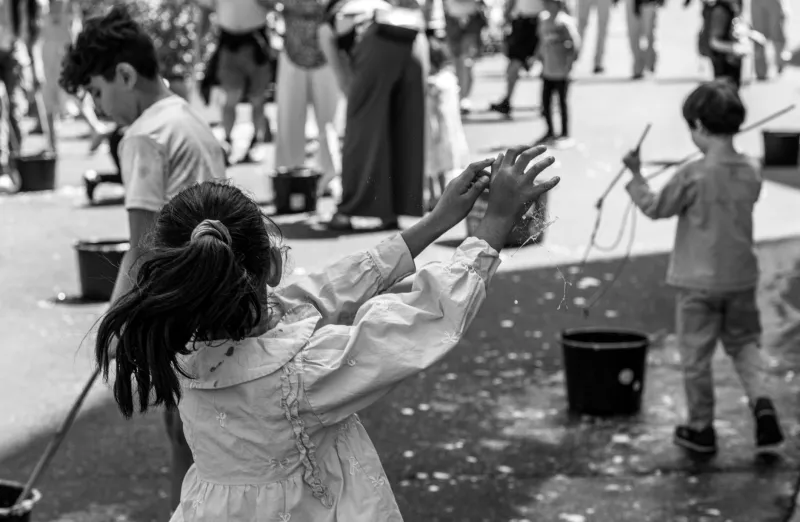
Mia and Sophie met by a pierogi-making demonstration on a Saturday afternoon in August. Mia had wandered over because she was curious about the dough. Sophie was there because her grandmother had pulled her by the hand, insisting this was something worth watching. Within ten minutes, they were both elbow-deep in flour, laughing at each other's lopsided attempts, while their respective families stood a few feet away doing that cautious small-talk thing adults do when their kids are clearly already friends.
That was two years ago. They live forty-five minutes apart in Illinois. They've seen each other seven times since.
This kind of story isn't rare at La Poland Park. It's practically a pattern.
Why This Park, Specifically
Friendships don't form in just any environment. Kids make friends when conditions are right — when there's something to do together, when the social pressure is low, when there's enough time and space for genuine interaction rather than just proximity.
La Poland Park hits those conditions in a way that's worth paying attention to.
For one thing, the park's scale works in its favor. It's not a sprawling mega-park where families get lost in the crowd and never see the same face twice. La Poland Park has an intimate quality — a human scale that makes it feel more like a really lively village gathering than a mass entertainment venue. You cross paths with people. You end up at the same demonstrations. You share tables at the food stalls because there's room and the food is good and nobody's in a rush.
That kind of repeated, low-pressure encounter is exactly how kids (and adults) tend to build genuine rapport.
Shared Experience as Social Glue
Here's something developmental psychologists consistently find: children bond fastest around shared novel experiences. Not just being in the same place, but going through something new together — trying something for the first time, figuring something out, laughing at the same unexpected moment.
La Poland Park is full of those moments. A kid who's never heard a krakowiak before, standing next to another kid who's equally wide-eyed, watching dancers move in patterns that are completely foreign to both of them — that's a shared experience with real bonding power. So is the first taste of bigos, or the moment a folk puppet show takes an unexpected turn that makes the whole crowd react.
When children experience something genuinely surprising together, they tend to look at each other instinctively. That eye contact, that shared reaction — it's one of the building blocks of connection.
The Multi-Generational Dynamic Changes Things
One thing that sets La Poland Park apart from a lot of kid-focused entertainment venues is that it genuinely works for multiple generations. Grandparents love it here. Teenagers don't hate it. Parents are actually engaged rather than just supervising.
That matters for friendship formation because it changes the social architecture of a visit. When adults are genuinely present and enjoying themselves — rather than scrolling their phones on a bench while waiting for the kids to finish — the whole family becomes more open and approachable. Conversations start more easily. Families end up spending time near each other longer.
Several parents have noted that their kids made friends at La Poland Park in part because they started talking to another family first. When adults are relaxed and engaged, kids pick up on that social permission. The park's ability to genuinely captivate multiple generations creates a social environment where connection can flow in all directions.
The Friendships That Followed People Home
Beyond Mia and Sophie, there are a lot of these stories.
A dad from suburban Ohio described his son — a quiet, cautious ten-year-old who struggles in new social situations — spending two hours at La Poland Park's craft area with a kid he'd never met. They were working on the same traditional folk art project, side by side, barely talking at first, then more and more. By the end, they'd exchanged contact info (via their respective parents) and had a video call scheduled for the following weekend.
He's never done that before, the dad said. Just walked up to a kid and made a friend. But something about that place made it feel easy.
A family from the Pacific Northwest who visited while on a road trip described meeting another family at a live music performance — both sets of kids had dragged their parents to the front of the crowd to watch the dancers. The adults started talking. They discovered they'd both grown up in the same city, had similar-aged kids, and shared a lot of the same values about travel and culture. They've since planned a joint trip to Poland together.
We joke that La Poland Park is our origin story, the mom said.
What Makes It Stick
Not every park friendship lasts past the parking lot. So what makes the ones formed at La Poland Park different?
Part of it is the richness of the shared experience. A friendship built around a two-minute roller coaster ride doesn't have much to stand on. A friendship built around an afternoon of shared exploration, shared food, shared laughter at the same folk puppet show — that has texture. There's something to remember together. There's a story.
Part of it is also the kind of families that tend to visit La Poland Park. This is a place that attracts people who are genuinely curious — about culture, about history, about the world beyond their own backyard. When curious families meet other curious families in a space that rewards that curiosity, the connections tend to be real rather than surface-level.
For Parents: How to Leave the Door Open
If you want to give your kids the best shot at turning a park encounter into something lasting, a few things help:
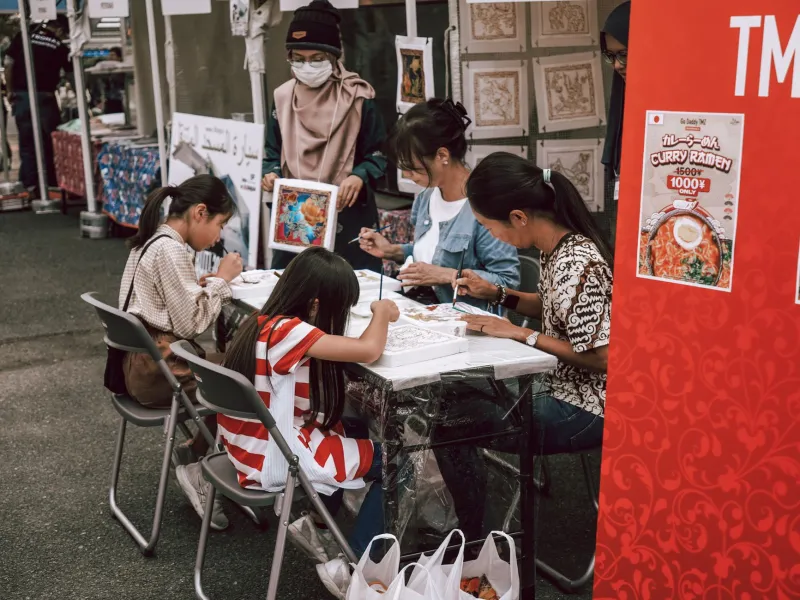
Slow down at the activity stations. The craft areas, the demonstration spaces, the food preparation stations — these are the places where kids naturally end up next to each other doing something together. Don't rush through them.
Eat near other families. The communal food spaces at La Poland Park are naturally social. Sitting near other families — rather than finding the most isolated table — opens the door to conversation.
Follow your kid's lead. If they've clearly clicked with another child, don't be in a hurry to move on to the next thing. Let it develop. An extra thirty minutes at a demonstration can be the difference between a pleasant moment and a lasting friendship.
Exchange contact info without making it weird. If the connection seems real, just say something simple: our kids clearly get along — want to stay in touch? Most parents appreciate the directness.
La Poland Park doesn't set out to be a matchmaker for childhood friendships. It just creates the conditions where they happen naturally — and that turns out to be one of the most valuable things a place can do.