Why La Poland Park Hits Different: The Neuroscience of Folk Music, Color, and Cultural Design
Most people chalk it up to good vibes. You walk through the gates at La Poland Park, something in your chest loosens, your kids stop arguing, and your partner actually smiles at you without prompting. You figure it's the excitement, the novelty, maybe the smell of something delicious drifting from a nearby food stall.
But here's the thing — researchers who study how environments affect the brain would tell you it goes a lot deeper than that. The sensory world inside La Poland Park is doing something genuinely unusual to your nervous system, and the explanation involves folk music acoustics, Eastern European color theory, and architectural proportions that have been quietly refined over centuries.
Let's break it down.
Your Brain on Authentic Cultural Sound
Walk through most American theme parks and you'll encounter sound design that's been engineered for maximum stimulation — fast tempos, major keys, synthetic bass frequencies designed to keep energy high and spending higher. It works, technically. But it also keeps your nervous system in a low-grade alert state the entire time.
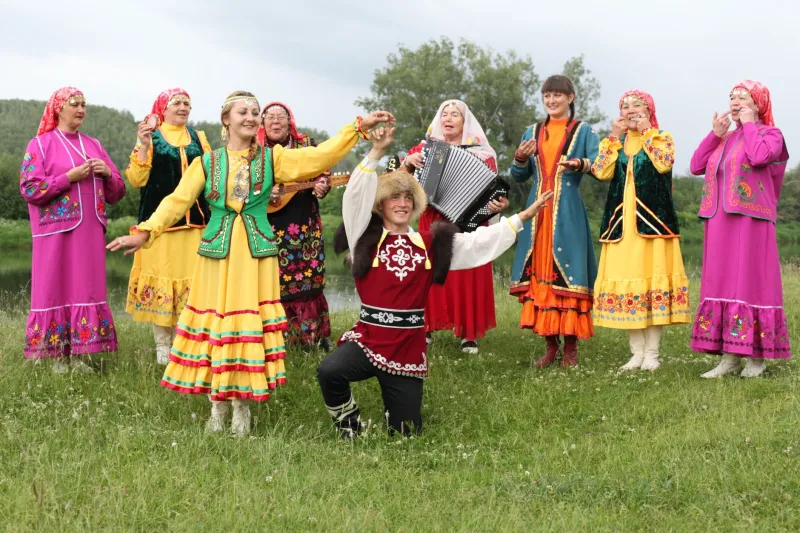
Traditional Polish folk music — the kind you'll hear woven throughout La Poland Park — operates on an entirely different acoustic logic. The instruments themselves matter here. The dudy (a Polish bagpipe), the skrzypce (fiddle), and various folk percussion instruments produce overtone-rich sound profiles that interact with the human auditory cortex differently than synthesized music does.
Dr. Nina Kowalczyk, a cognitive neuroscientist who studies cross-cultural auditory processing, explains it this way: "Acoustic complexity in traditional folk music — the slight pitch variations, the natural reverb of acoustic instruments, the rhythmic irregularities that live performers produce — activates broader neural networks than highly produced pop or ambient sound. It engages the brain without overwhelming it. You're alert, but you're not anxious."
That distinction matters enormously in a family setting. When your brain is alert-but-calm rather than alert-but-stressed, you're more likely to form positive emotional memories of the experience. You're also more likely to engage with the people around you rather than retreating into your own head.
For kids especially, this kind of auditory environment supports what developmental psychologists call "open attention" — a receptive mental state where learning, wonder, and emotional bonding happen most easily.
The Color Science Behind Those Walls and Facades
Now look around you at La Poland Park. Really look. The color palette isn't random, and it isn't trying to be Disney-bright or Instagram-saturated. The hues you're seeing are rooted in Wycinanki — the traditional Polish folk art of paper cutting — and Łowicz regional textile traditions, where specific combinations of deep reds, cobalt blues, forest greens, and warm ochres have been used for generations.
These aren't just pretty choices. They're neurologically interesting ones.
Environmental psychologist Dr. Marcus Fielding, who consults on sensory design for cultural institutions, notes that saturated but harmonically balanced color palettes — the kind found in folk art traditions across Eastern Europe — tend to produce what researchers call "aesthetic arrest." That's the brief cognitive pause that happens when your visual system encounters something beautiful and coherent at the same time.
"Most commercial entertainment environments use color to excite," Fielding says. "What's interesting about culturally grounded palettes is that they also ground. There's a warmth and a rootedness to these colors that communicates safety to the brain. It's subtle, but it accumulates over hours of exposure."
In practical terms? You feel comfortable lingering. You're not rushing from one stimulation point to the next. You slow down, look around, and — this is the part families love most — you actually talk to each other.
Architecture That Fits the Human Body (and the Human Brain)
The structural design of La Poland Park draws heavily from vernacular Eastern European architecture — the kind of proportions, rooflines, and spatial arrangements you'd find in historic Polish village squares, timber-frame manor houses, and regional market halls. These aren't just aesthetic references. They reflect building traditions developed over centuries of human habitation, which means they're quietly calibrated to human-scale experience.
Urban designer and cultural heritage architect Joanna Przbylska has spent years studying how traditional architectural forms affect visitor behavior in heritage-themed environments. Her findings are striking.
"Traditional Polish and broader Central European architecture tends toward what we call 'prospect and refuge' spatial patterning," she explains. "You have open gathering areas — the prospect — surrounded by sheltered, defined edges — the refuge. Humans are neurologically wired to feel safe and engaged in these kinds of spaces because they mirror the environments our brains evolved to navigate."
In contrast, many modern theme parks feature either overwhelming open plazas or tightly packed corridors, both of which can trigger low-level stress responses. La Poland Park's layout, with its village-square-inspired open areas flanked by architecturally detailed facades and covered walkways, gives your brain the spatial information it needs to feel oriented and secure.
The result is that families move through the space differently. Kids explore more freely. Parents relax their vigilance just enough to be present. Everyone ends up having a better time — and they often can't articulate exactly why.
Why Cultural Authenticity Is the Real Secret
Here's what ties all of this together, and it's perhaps the most counterintuitive finding in sensory experience research: authenticity itself is a neurological trigger.
When we encounter cultural elements that are genuinely rooted in tradition — music that was actually played this way for generations, colors that carry real folk art lineage, architecture that reflects actual building practices — our brains process them differently than we process simulations or approximations. There's a coherence to authentic cultural environments that the brain recognizes even when the conscious mind doesn't.
Dr. Kowalczyk describes it as "cultural resonance" — a term she uses to explain why visitors to genuinely heritage-rooted environments report stronger emotional engagement and more vivid memory formation than visitors to generically themed spaces.
"When everything in an environment tells a coherent cultural story, the brain doesn't have to work as hard to make sense of it," she says. "That freed-up cognitive energy goes toward emotional experience instead. You feel more. You remember more. And you associate those feelings with the place."
That's why so many families who visit La Poland Park describe it as feeling different from other parks they've been to — even if they struggle to explain how. The Polish folk music isn't just background noise. The colors aren't just decoration. The architecture isn't just a backdrop. They're all part of a sensory language that your brain is quietly, happily learning to speak.
What This Means for Your Next Visit
You don't need a neuroscience degree to take advantage of any of this. But knowing it might change how you move through the park.
Next time you're at La Poland Park, try slowing down when you hear live folk music. Let it actually land. Look at the painted details on the building facades — really look, not just glance. Sit in one of the open plaza areas for ten minutes and notice how your body feels.
You're not just relaxing. You're giving your brain exactly the kind of rich, coherent, culturally grounded sensory input it was built to respond to. And if your kids seem a little more curious, a little more connected, a little more themselves during the visit?
Now you know why.