Why Your Kids Will Remember La Poland Park Long After They've Forgotten Everything Else
Ask any adult about their most vivid childhood memories and you'll probably hear about a trip somewhere — a place that smelled different, sounded different, felt different from ordinary Tuesday afternoons. There's a reason those experiences stick when a hundred forgettable days don't. And if you've ever watched your kid's eyes go wide the moment they step into La Poland Park, you've already witnessed the science happening in real time.
Let's break down what's actually going on in those little brains — and what you, as a parent, can do to make the most of it.
The Brain Loves Novelty (Like, Really Loves It)
Here's the short version of some genuinely fascinating neuroscience: the hippocampus, the part of the brain responsible for forming long-term memories, gets especially activated when it encounters something new. Researchers call this the "novelty effect," and it essentially means your brain flags unfamiliar experiences as worth keeping.
For most American kids, a theme park built around Polish culture is about as novel as it gets. The architecture looks different from anything in their neighborhood. The music has rhythms they haven't heard on the radio. The food smells like nothing from their school cafeteria. Every one of those sensory surprises is basically a signal flare to the hippocampus: pay attention, this matters.
La Poland Park doesn't just offer rides — it offers a whole world that doesn't exist anywhere else in their daily life. That's not just good entertainment. That's neuroscience doing its thing.
Emotion Is the Glue That Makes Memories Stick
Novelty gets the brain's attention, but emotion is what makes a memory last. Studies consistently show that experiences tied to strong feelings — joy, wonder, surprise, even a little bit of nervous excitement — are encoded more deeply and retrieved more easily years later.
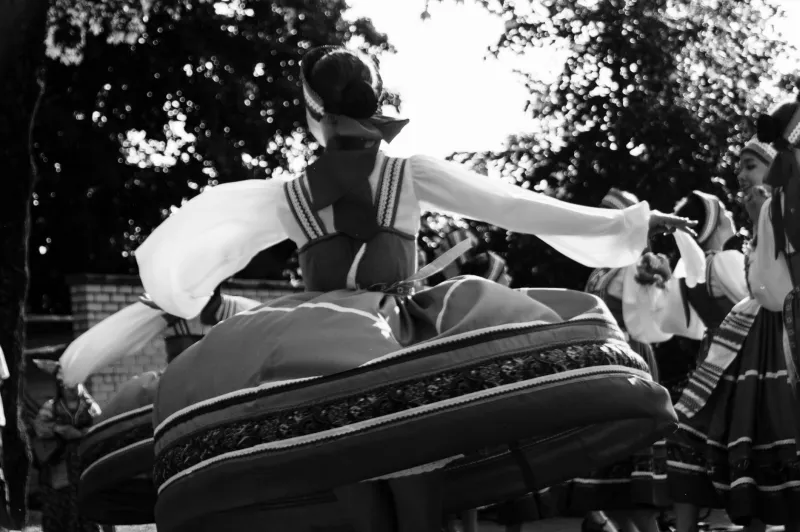
Think about the moments at La Poland Park that tend to produce the biggest reactions: a child trying their first bite of pierogi and completely losing it over how good it tastes, or watching a folk dance performance and suddenly wanting to try the footwork themselves, or finishing a hands-on craft activity and holding up something they actually made. Those aren't just cute moments for your camera roll. Each one is an emotional anchor that helps cement the whole experience into long-term memory.
This is also why passive experiences — watching a screen, sitting through a lecture — tend to fade faster than active ones. The emotional engagement just isn't the same.
Storytelling Gives the Brain a Framework
One of the quieter strengths of La Poland Park is that it's built around narrative. Polish history, folklore, and cultural traditions aren't just decorations here — they're woven into the experience through characters, signage, demonstrations, and the way attractions are themed. And that matters more than you might think.
Cognitive psychologists have long argued that humans are fundamentally story-processing creatures. When we encounter new information wrapped in a narrative — a character with a goal, a tradition with an origin, a recipe with a family history — we understand and retain it far better than isolated facts.
When your kid learns that a particular craft has been passed down through Polish families for generations, or that a piece of music was played at harvest festivals centuries ago, they're not just absorbing trivia. They're placing themselves inside a story. And stories, as any kindergarten teacher will tell you, are incredibly hard to forget.
The Multi-Sensory Advantage
Sight, sound, smell, taste, touch — La Poland Park hits all five, often simultaneously. That's not an accident, and it turns out it's also excellent for memory formation.
Research on "encoding specificity" suggests that memories are stored along with the sensory context in which they were formed. The more sensory channels involved during an experience, the more retrieval cues your brain has later. In plain English: smelling something similar to the food at the park years later might suddenly bring the whole visit rushing back.
This is why so many adults can describe in almost cinematic detail a theme park visit from when they were seven — the exact smell of the food stands, the way a particular song sounded, the texture of a souvenir they held. The senses were all firing at once, and the memory got encoded from multiple angles.
What Parents Can Actually Do With This Information
Okay, so the park is basically designed to create lasting memories. But there are still things you can do to help the process along.
Talk during the experience, not just after. Narrating what you're seeing and doing helps children build language around the memory, which makes it easier to retrieve later. "Remember when we tried the bigos and you said it tasted like a campfire?" is a retrieval cue you just created on the spot.
Let them lead sometimes. Autonomy is a powerful emotional amplifier. When a child chooses which activity to try or which food to taste, they have more ownership over the experience — and ownership increases emotional investment, which deepens memory encoding.
Don't rush the moments that land. If your kid is completely transfixed by a folk performance or deeply focused on a craft project, resist the urge to move on to the next thing. Those absorbed, focused states are exactly when deep encoding happens. Let it breathe.
Revisit the memory deliberately. The science of memory consolidation shows that recalling an experience multiple times strengthens it. Talk about the visit at dinner that night. Bring it up a week later. Look at photos together. Every time you revisit it, you're reinforcing the neural pathway.
Connect it to something at home. Did your child love the folk music? Find a playlist. Did they get obsessed with a particular food? Try making a version at home together. When a new experience connects to ongoing life, it gets woven into a larger memory network rather than sitting as a one-off event.
The Bigger Picture
There's something genuinely moving about the fact that a day at La Poland Park can leave a mark that outlasts years of ordinary days. It's a reminder that what kids need most isn't more stuff — it's more experiences that engage them fully, emotionally, and sensorially.
La Poland Park happens to be exceptionally good at delivering exactly that. The culture is rich, the sensory environment is immersive, and the activities demand real participation. Whether the designers knew they were building a memory machine or just built something genuinely wonderful, the result is the same.
Your kids will remember this place. Now you know why — and how to make sure they remember it even better.